What are cash flow patterns, and why they matter more than income
Robert’s rich dad had a simple rule: the most important words in business and investing are “cash” and “flow.” It’s possible to have the best ideas in the world, offer an incredible product, or hold an impressive-looking balance sheet — and still lose everything, because none of that guarantees cash flow. Cash flow isn’t a salary, and it isn’t the extra money made hustling on a Saturday. Cash flow is passive income that arrives through business ownership or investing — money that shows up in a bank account on a regular basis whether or not its owner shows up for work.
Nearly a quarter of American households now qualify as living paycheck to paycheck, spending almost all of their income on necessities before anything is left over, according to a 2025 Bank of America Institute analysis reported by CBS News. That statistic says less about how much people earn and more about their cash flow pattern — the direction their money moves once it arrives.
A quick exercise makes this concrete: list every expense in one column and every source of income in another. Then cover up any income that isn’t true cash flow — salary, side gigs, anything tied to active work — and look at what’s left. If that remaining income disappeared tomorrow, what would happen? For most people, the honest answer reveals exactly which cash flow pattern they’re currently living inside.
The personal financial statement: How a cash flow pattern shows up on paper
Rich dad taught that the fastest way to see a cash flow pattern is to build a personal financial statement — two simple documents in one. The income statement lists income and expenses. The balance sheet lists assets and liabilities. The relationship between those two documents, more than the number at the top of a pay stub, is what actually determines a cash flow pattern.
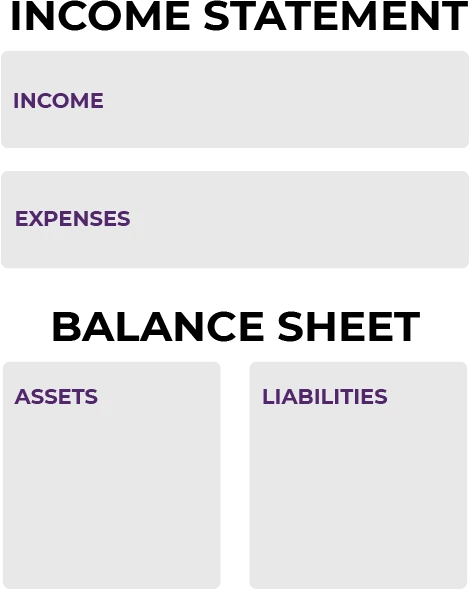
Rich dad illustrated this with simple diagrams rather than complicated spreadsheets, because he wanted the difference between the patterns to be impossible to miss.
The three cash flow patterns: Poor, middle class, and rich
Cash flow pattern of the poor
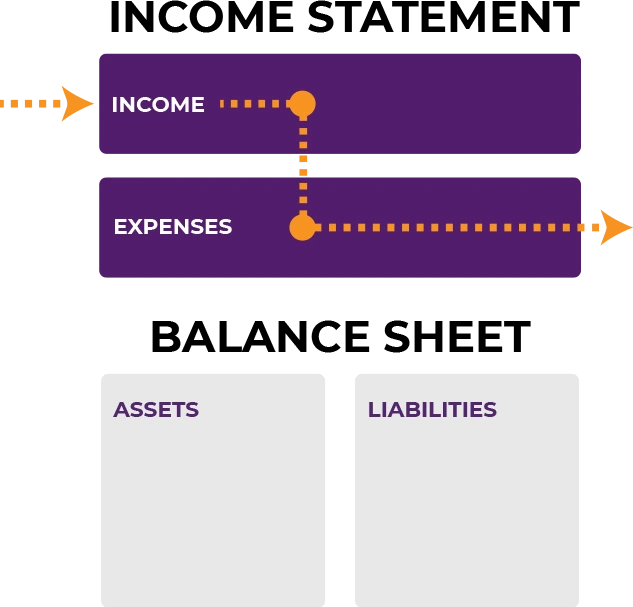
People with this pattern are often working two jobs just to make ends meet, yet they still describe themselves as living paycheck to paycheck. Money arrives in the income column and immediately exits through expenses, with nothing left to redirect into assets. If a layoff hits, there’s no cushion — the results can be financially devastating.
Cash flow pattern of the middle class — the Rat Race
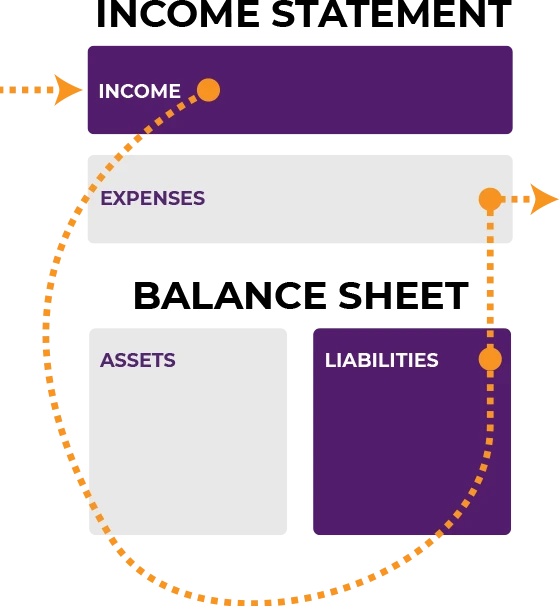
The middle-class pattern looks smarter from the outside. These are the households with the nicer homes, the newer cars, and the higher-paying jobs. But rich dad called this the “working-class dream” for a reason: after setting aside a little in a 401(k), spare income routinely goes toward doodads — rich dad’s word for a liability that looks like an asset but only takes money out of a pocket. A poor person might spend 30% of a paycheck on rent; someone in the middle-class pattern spends a similar 30% on a mortgage for a bigger house. The dollar amounts differ, but the mechanism is identical — earned income still covers the expense every month, just at a higher price point. Over time, that lifestyle can only be maintained with a higher-paying job or longer hours, and a single layoff can collapse the entire structure, because there’s still no real cash flow underneath it.
Cash flow pattern of the rich
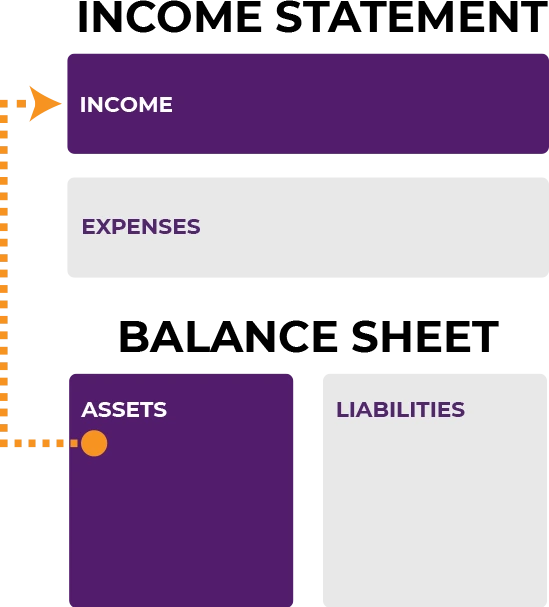
The rich pattern removes the job from the center of the picture. Money moves from the asset column of the balance sheet directly into the income column of the income statement — capital gains, dividends, rental income, and royalties, rather than a paycheck. This is also the idea behind the title of the first chapter of Rich Dad Poor Dad: “The Rich Don’t Work for Money.” Look again at the three patterns above and notice what’s missing from the rich pattern — a job. While the poor and the middle class go to work and trade time for a paycheck, the rich spend their time acquiring assets instead, so a salary (if they even have one) becomes a bonus on top of cash flow that would keep arriving without it.
The three types of income behind every cash flow pattern
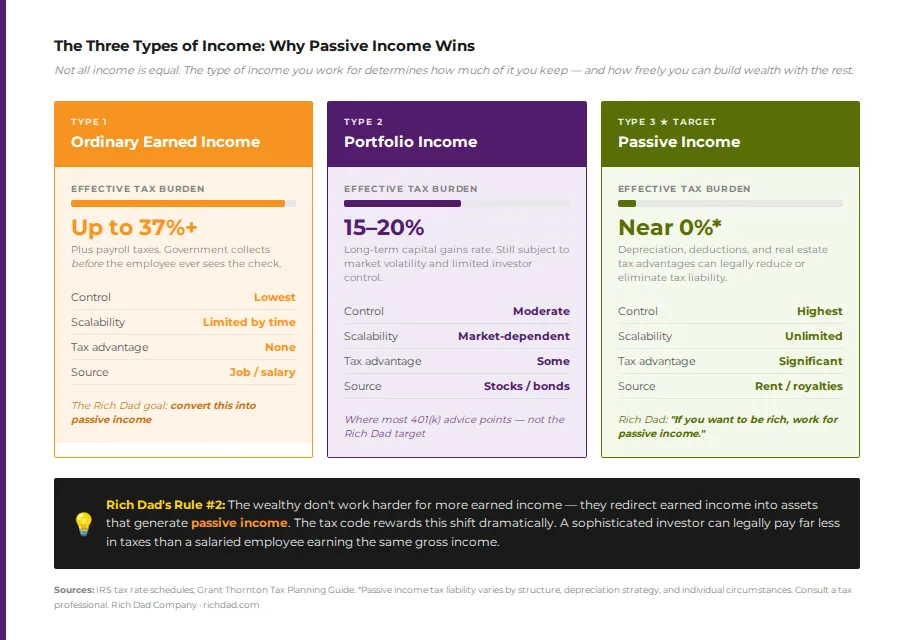
Every cash flow pattern is built from some combination of three types of income:
- Earned income – a paycheck, traded directly for time,
- Portfolio income – capital gains from buying low and selling high, and
- Passive income – cash flow from assets that keeps arriving whether or not someone works that day.
The poor and middle-class patterns run almost entirely on earned income. The rich pattern is built to maximize the third type, because passive income is the only one of the three that scales without requiring more hours.
How the CASHFLOW Quadrant shapes a cash flow pattern
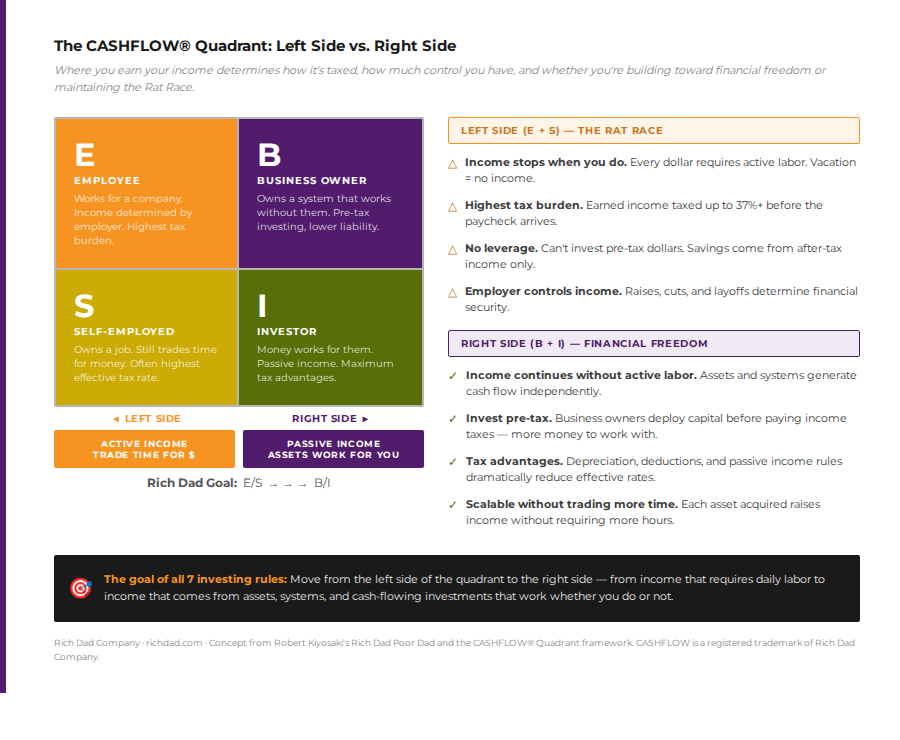
Rich dad illustrated the mindset behind each cash flow pattern with the CASHFLOW Quadrant — four types of people, split into two sides. Employees and the self-employed sit on the left side of the quadrant. They think of money as something that has to be earned by trading time, and they trust someone else — an employer, or their own labor — to keep it flowing. Business owners and investors sit on the right side. They think of money as something to be generated, and they build or buy systems that produce it without a constant trade of hours.
The cash flow pattern of the poor and the middle class both live almost entirely on the left side of the quadrant. The cash flow pattern of the rich lives on the right. Becoming rich, in Rich Dad’s framework, is really a mindshift from the left side of the quadrant to the right.
Why the right side of the quadrant changes the tax pattern too
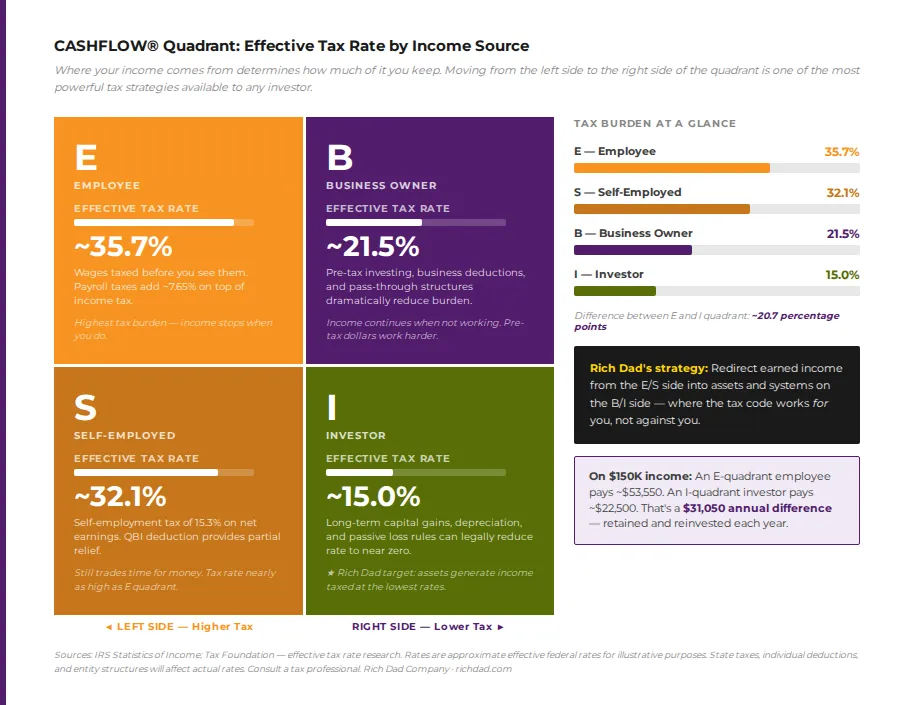
Shifting sides of the quadrant doesn’t just change where money comes from — it changes how much of it gets kept. Employees pay the highest effective tax rates because payroll taxes and income tax come out before a paycheck ever reaches a bank account. Business owners and investors, by contrast, can invest pre-tax dollars, apply depreciation, and structure entities in ways that legally reduce their effective rate. The same government that taxes a salary aggressively often taxes good debt and cash-flowing assets far more gently — one more reason the cash flow pattern of the rich compounds faster than it looks like it should on paper.
Velocity of money: Turning one cash flow pattern into compounding wealth
The right side of the quadrant isn’t just about owning one cash-flowing asset — it’s about the velocity of money: using the cash flow from one asset to acquire the next one, without losing control of the first. Rich dad’s formula was simple:
- Invest in an asset
- Get the original money back
- Keep control of the asset
- Move that same money into another asset
- Repeat
As velocity increases, cash flow from existing assets outpaces expenses, and purchasing power for new assets keeps growing. That compounding loop — not a single lucky investment — is what actually produces financial freedom inside the rich cash flow pattern.
Cash flow patterns through four economic ages
Robert has described four major economic mindshifts in human history, and in every one of them, the strategy for getting ahead was the same: cash flow.
- Hunter-Gatherer Age — the chief received goods from those who hunted and gathered on their behalf. Only one person could hold that position.
- Agrarian Age — landowners collected the output of peasants working their land. Only royalty could typically own land.
- Industrial Age — factory owners who controlled resources and production hired others to generate cash flow for them. Building an industrial empire required serious capital and expertise.
- Information Age — today’s internet and inexpensive technology mean a cash-flowing business or investment can be built with comparatively little capital. The barrier to entry has never been lower, but the pattern still has to be learned rather than inherited.
Financial and emotional intelligence: What it takes to shift a pattern
Operating on the right side of the quadrant requires both financial intelligence and emotional intelligence. Financial intelligence means investing in real financial education — learning the language of money and specializing in a specific way of creating cash flow, whether that’s real estate, a business, or paper assets. Emotional intelligence is what keeps someone in the game long enough for that education to compound; shifting a cash flow pattern is not a get-rich-quick process, and low emotional intelligence is usually why people quit right before it starts working.
Rich dad also taught his students to monitor cash flow at a global level, not just a personal one, by watching three things: where jobs are moving, where people are moving in response, and where cash itself is flowing — into stocks, into safe havens like bonds and savings, and back out again. Reading those signals correctly, and reacting before the crowd does, is part of what separates a rich cash flow pattern from a lucky one.
Why gameplay reflects real life
Robert first learned about cash flow patterns as a kid, playing Monopoly for hours with his best friend — the son of his rich dad. Decades later, after Robert and Kim Kiyosaki exited the Rat Race themselves, they built their own version of that childhood game: CASHFLOW 101, now sold as the CASHFLOW board game, along with the free online CASHFLOW Classic. The avatars in the game mirror real-world professions, and gameplay tends to mirror real life — most people discover that the choices they make at the table reflect the cash flow pattern of the poor or the middle class, not the rich, the first time they sit down to play.
How to audit and change a cash flow pattern
Nobody is stuck with the cash flow pattern they currently have. Three concrete steps can start the shift:
- Complete a personal financial statement
Use a free worksheet to map current income, expenses, assets, and liabilities exactly as described above. - Audit the income mix
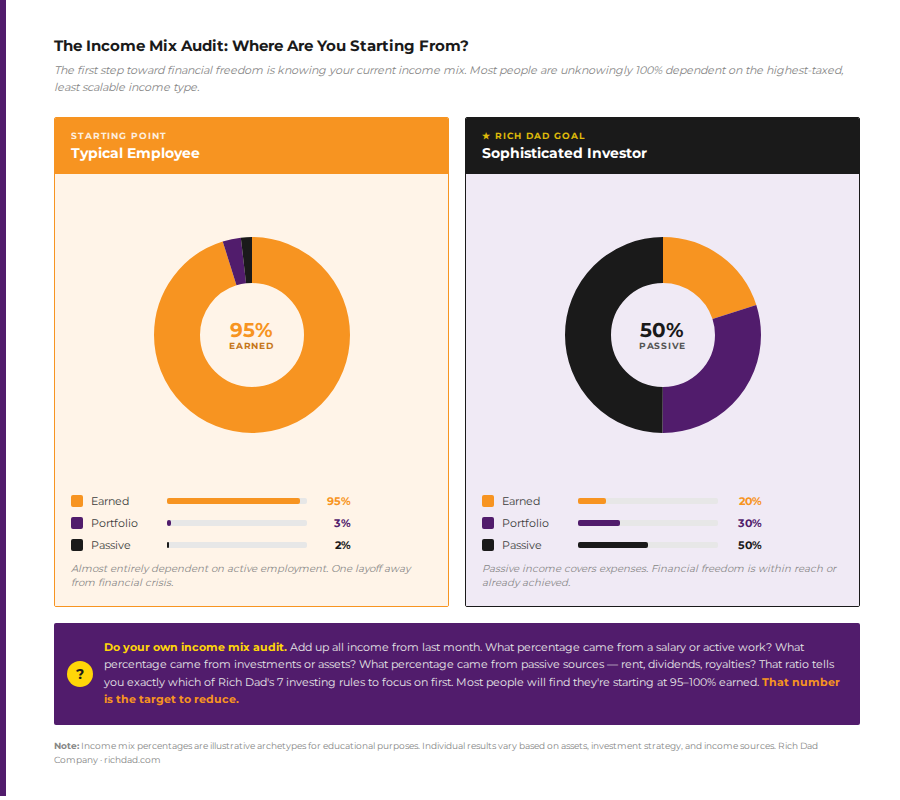
Add up last month’s income and calculate what percentage came from a job, from portfolio income, and from true passive cash flow. Most people find they’re starting at 90–100% earned income — and that number is the one to shrink. - Play CASHFLOW
The CASHFLOW board game — or the free CASHFLOW Classic online version — puts a cash flow pattern under a spotlight faster than a spreadsheet ever will, because gameplay tends to mirror real financial behavior.
The right cash flow pattern is habit
A cash flow pattern isn’t fixed by birth, income, or luck — it’s a habit of where money is allowed to go once it arrives, and it can be re-trained. Understanding the personal financial statement, the three types of income, the CASHFLOW Quadrant, and the velocity of money gives anyone the same tools rich dad used to teach this shift for more than three decades. The pattern that’s normal today doesn’t have to be the pattern that’s permanent.
FAQs
Rich dad taught that the poor, the middle class, and the rich each follow a distinct cash flow pattern. The poor spend nearly all earned income on expenses. The middle class spends higher earned income on bigger liabilities — the “Rat Race.” The rich direct money from assets into their income column, generating cash flow that doesn’t depend on a job.
Income includes any money coming in, including a paycheck earned by trading time. Cash flow specifically refers to passive income — money generated by assets, such as rental income, dividends, business distributions, or royalties, that arrives regardless of whether someone is actively working.
Yes. A high salary that gets absorbed entirely by a bigger mortgage, more expensive cars, or lifestyle upgrades still follows the middle-class pattern, because none of that income is being converted into assets that produce their own cash flow. Cash flow pattern is about the direction money moves, not the size of a paycheck.
Build a personal financial statement listing income, expenses, assets, and liabilities, then check whether spare money after expenses is going toward liabilities (middle-class pattern) or income-producing assets (rich pattern). Auditing the percentage of income that’s earned versus passive is the fastest diagnostic.
Start by redirecting new dollars into cash-flowing assets instead of new liabilities, and study the CASHFLOW Quadrant to understand why business ownership and investing produce a fundamentally different pattern than employment or self-employment. Financial education and consistency matter more than the size of any single investment.