What Is Entrepreneurial Success?
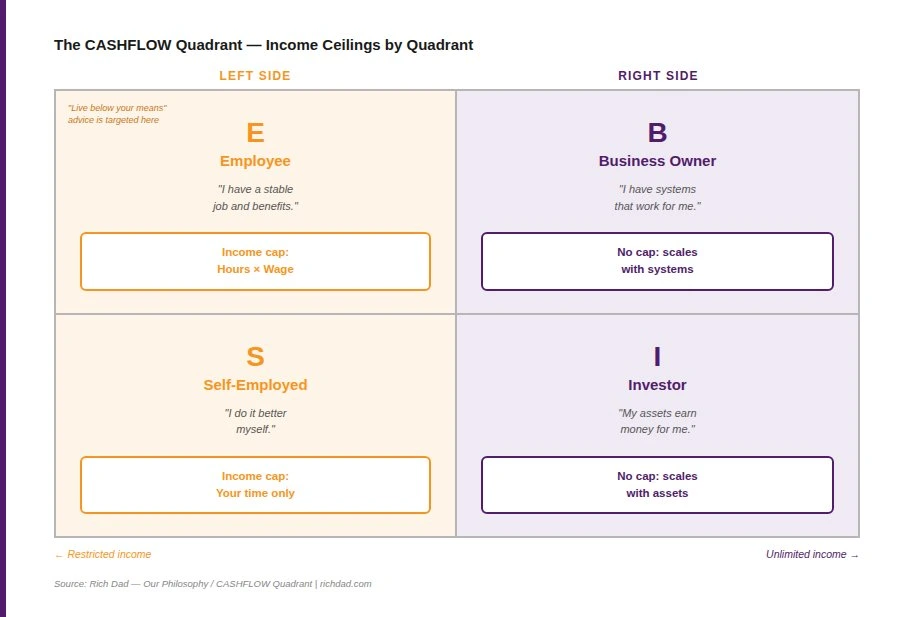
Entrepreneurial success is not a big revenue number or a packed calendar. In the Rich Dad view, it means building a business that produces cash flow and runs on systems and people, so your income no longer depends on your own hours. That is the difference between owning a business and owning a job. It is also the line the CASHFLOW® Quadrant draws between the left side (Employee and Self-Employed) and the right side (Business Owner and Investor). Rich Dad’s philosophy is built on that shift.
Many self-employed people think of themselves as entrepreneurs, but generally they are not. A writer or lawyer who wears one hat is trading time for money, just like an employee. An entrepreneur builds something that works without them, and that takes a different set of characteristics. For a closer look at crossing that line, see How to Become a Successful Business Owner.

Why Entrepreneurial Success Is Hard to Reach
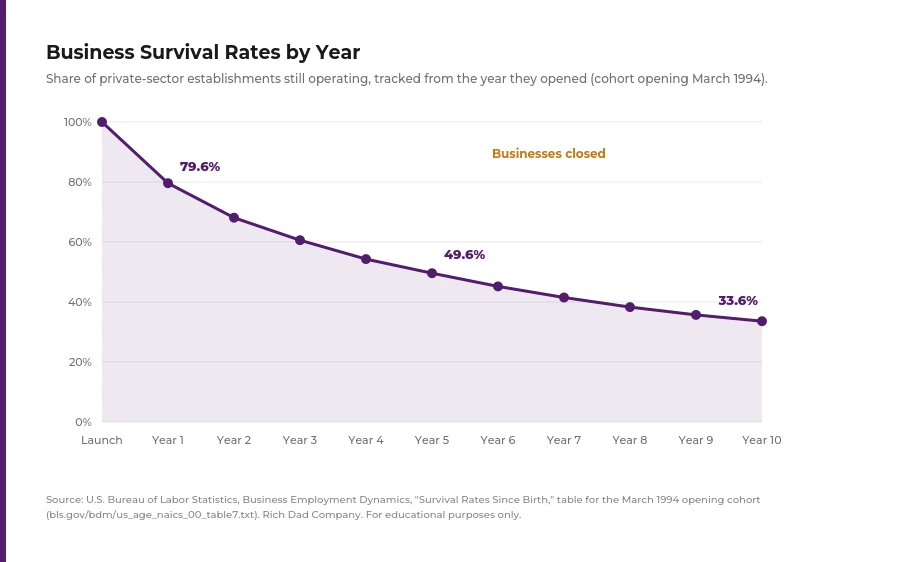
The odds are real. According to the U.S. Bureau of Labor Statistics, 79.6% of private-sector businesses born in March 2013 were still operating a year later. By year five, 50.6% remained. By year ten, only 34.7% were still open.
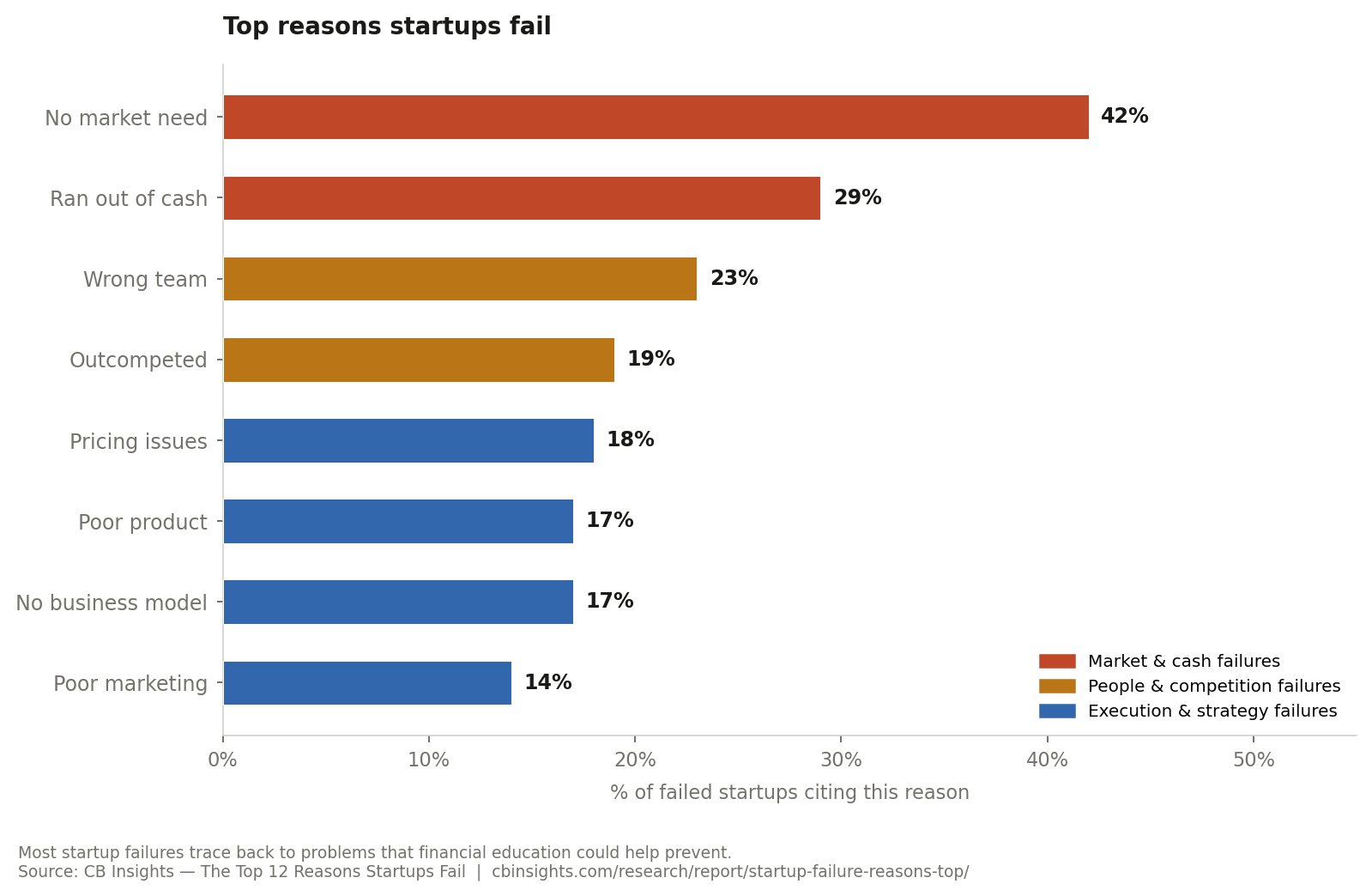
Why do so many close? In a CB Insights analysis of 101 startup post-mortems, 42% of failed startups cited no market need, 29% ran out of cash, and 23% pointed to the wrong team. Those are founders’ own explanations from a sample of startups, so they won’t match every Main Street business. Still, in Rich Dad’s view the pattern is clear: most of these problems trace back to judgment, money skills, and people rather than bad luck. For the full story on failure, see Why Do Entrepreneurs Fail?
The 5 Characteristics of Entrepreneurial Success
After decades of working with business owners and investors, Rich Dad has identified the characteristics that most often lead to entrepreneurial success. Researchers have asked the same question. A meta-analysis of the Big Five personality traits found that entrepreneurs scored higher than managers on conscientiousness and openness to experience, and lower on neuroticism and agreeableness, though the effect of each individual trait was small. A study of more than 10,000 founders by Columbia Business School researchers linked neuroticism to worse results on every outcome measured, a sign that resilience matters.
No single trait guarantees entrepreneurial success, and none is fixed. These five are habits you can strengthen.
1. Thick Skin: Bravery and Fortitude
Entrepreneurial success starts with the courage to go your own way and the fortitude to keep moving after you fail. When you announce that you’re leaving a job to start a business, people may call you crazy, partly because they don’t understand your motives and partly because they wish they had your nerve. The road can be lonely, because your challenges and wins are unique and many people simply cannot relate.
Robert Kiyosaki learned this firsthand. His first business sold Velcro surfer wallets carrying licensed band names and logos. They sold like hotcakes, but he made a lot of mistakes and had to shut the company down when cash ran short. It was his rich dad who reviewed the financials and told him he had run the company into the ground. Robert Kiyosaki needed thick skin to hear that and listen. Then, instead of retreating to a job as many people urged, he built his next business. Today, Rich Dad is a thriving company. Those who show strength of character get stronger in the face of failure, because they learn from the mistake and adjust for the next opportunity.
2. Self-Motivation and the Passion Behind It
Employees show up because they’ll be fired if they don’t. When you build your own business, nobody gives you a mid-year review, plans your next quarter, or counts your sick days. You are accountable to yourself. Passion makes that easier. If you don’t love what you’re doing, why are you doing it? Passion is also contagious: it is how you sell your product, connect with customers, and persuade others to invest in your vision.
Motivation has to last beyond the launch. Once a company is running, it is easy to let it drift on autopilot, but if you’re not growing, you’re dying. It takes energy to keep a business growing and adjusting as the market changes. When motivation dips, as it does for everyone, return to your “why.”
3. A Great Network and Team
“Business and investing are team sports,” Rich Dad always said. Successful entrepreneurs hustle to build relationships with people who can help them and their company. That can mean an early-morning call to someone overseas or a weekend at a conference. Robert Kiyosaki has accountants, attorneys, and advisors of all kinds on his team, and they are the best in the business because he spent time and effort researching, networking, and hiring.
A team does not replace financial education. The entrepreneurs who build the strongest teams study taxes, legal structure, and cash flow themselves, so they can tell a great advisor from a mediocre one. Start with Rich Dad’s guides to business taxes and legal and asset protection, and learn how to choose a business partner.
Leading that team calls for a particular mindset: look to praise, not to be praised. Employees get constant feedback, while entrepreneurs often get none, or hear only negative feedback when the market or a team member pushes back. The best business owners are confident in their decisions and self-aware enough to self-correct, and they are genuinely eager to give credit to employees and partners. One of the great joys of entrepreneurship is giving others a livelihood and watching them thrive. See Rich Dad’s guide to business leadership.
4. Flexibility: Wearing Every Hat
In a single day, an entrepreneur might wear the lawyer hat to negotiate a contract, the accountant hat to balance the books and project cash flow, the manager hat to hold a hard conversation with an employee, the marketing hat to adjust the website, and the sales hat to close a deal. You need to be good at all of them, and motivated to do each one well. The best entrepreneurs move from role to role as the business demands.
5. Integrity
An entrepreneur must honor commitments and be honest at all times. If your own moral compass isn’t reason enough, consider your public image: in the age of social media, everything you say and do is effectively public record, and anything can go viral in minutes. Run your business with integrity and you earn the respect of colleagues and customers, and you won’t have to worry about a scandal.
What Entrepreneurial Success Can Pay
Building these characteristics can pay off. Analysis of tax data by the Federal Reserve Bank of Minneapolis found that workers who try self-employment and workers who stay in paid jobs earn about the same at age 25, but by age 55 the self-employed group averages about $134,000 a year, compared with about $79,000 for paid employees (in 2012 dollars). That is roughly 1.7 times as much.
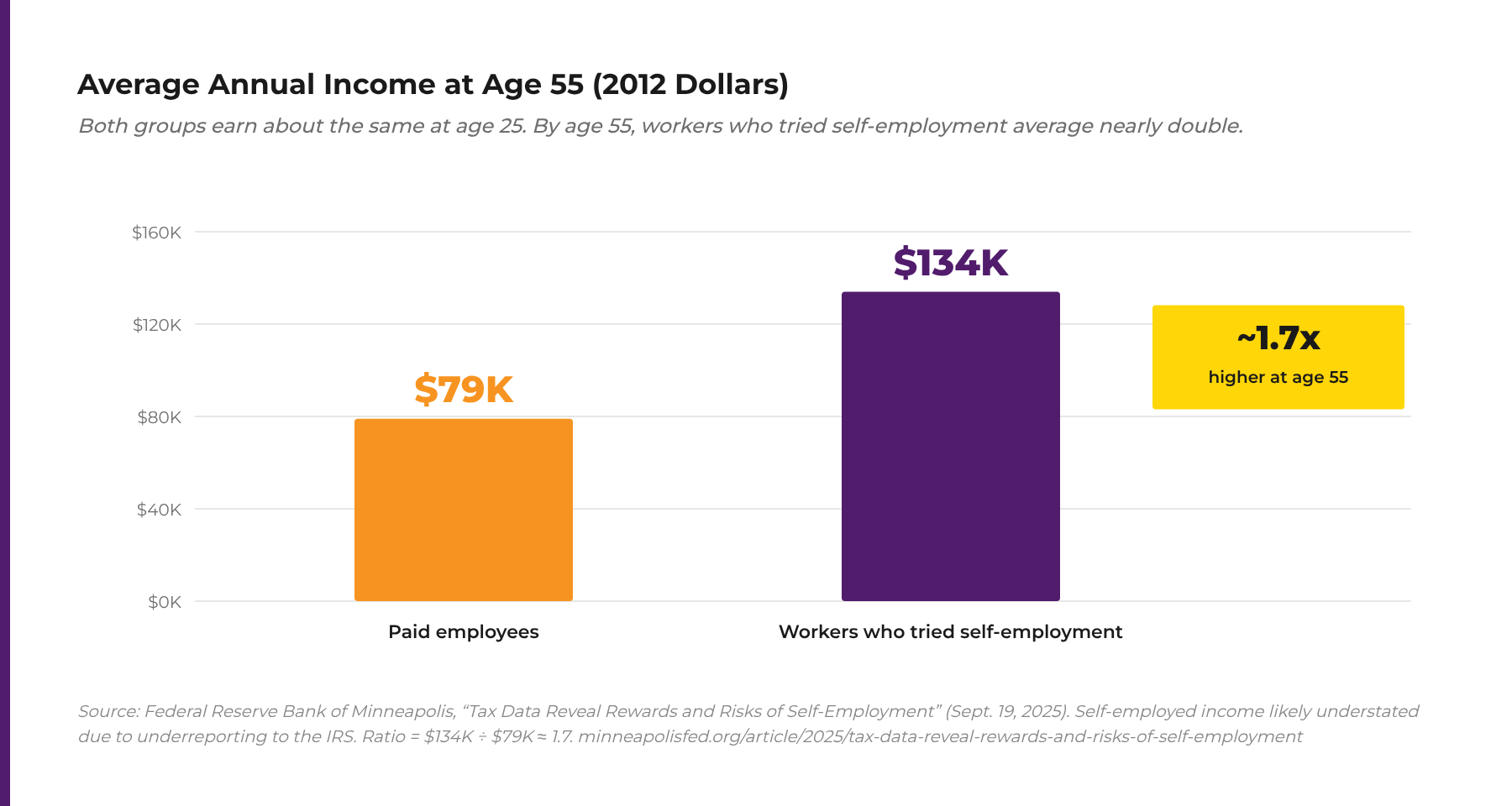
Treat that as an average, not a promise. The researchers note the self-employed figure likely understates true income because of underreporting to the IRS, but the figures also describe people who tried self-employment, not guaranteed outcomes for any one business. Rich Dad measures success by control and cash flow, not by a paycheck alone. If you’re ready to begin, see Rich Dad’s guide to how to start a business without money.
3 Self-Sabotaging Behaviors That Block Entrepreneurial Success

Now for the flip side. For many people, the biggest obstacle starts in their own head. Whether the dream is financial freedom, jumping out of an airplane, or expanding a social circle, we place limits on ourselves that keep us from living it, often without realizing it. Three behaviors do the most damage.
1. Staying in Your Comfort Zone
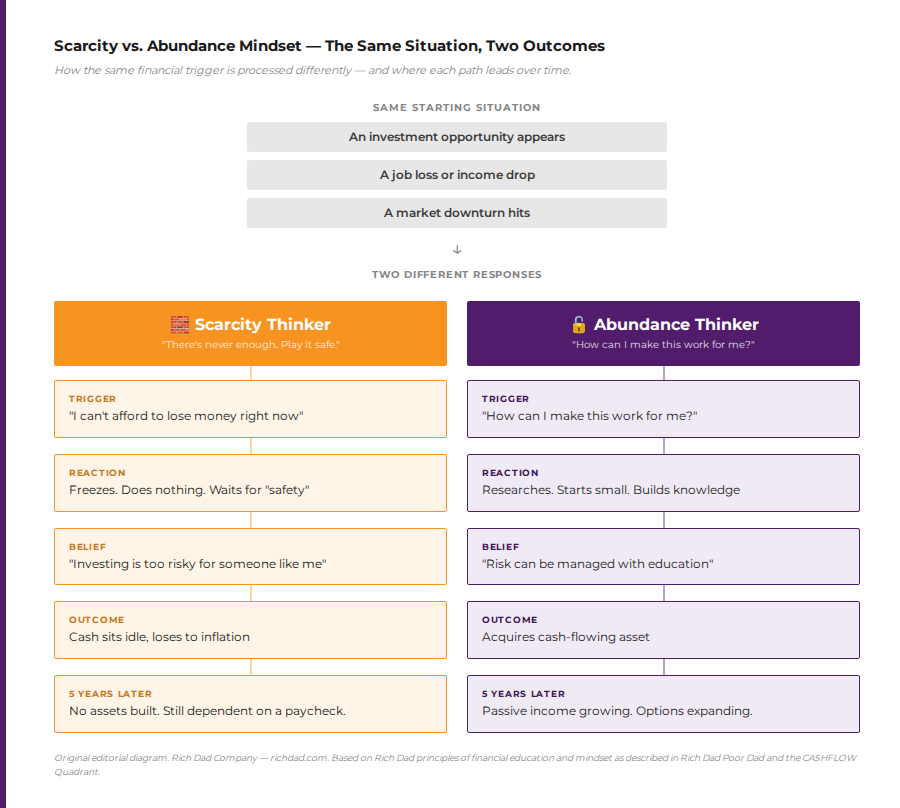
The critical inner voice likes to keep you in a safe box. Your brain treats that as self-preservation, protecting you from vulnerability, mistakes, judgment, and disappointment. That voice says “you aren’t worthy,” “that’s too much work,” or “what if you fail?” If you’ve listened long enough, you may have started to believe it.
2. Believing a Negative Self-Image
Whether it’s left over from a tough childhood, a painful divorce, or a harsh boss, or is entirely self-inflicted, your inner critic can be so familiar that you never challenge it. People get stuck in patterns and build their whole lives around those limits. The defenses meant to protect you end up shrinking your potential.
3. Letting Fear Rule
In almost everything you do, you act out of either fear (ego) or love. Fear shuts you down, makes you hide, and leads you to suffer silently. Love is the energy that pushes, heals, and opens you up. Fear of the unknown, of failure, of rejection, and of judgment holds many entrepreneurs back. But if you don’t fight through that fear, you’ll never know what exists on the other side of it or what you are capable of.
The Self-Sabotage Test
If any of those situations sound familiar, try this quick exercise in creativity and overcoming assumptions:
- Divide a piece of paper into three columns.
- In the first column, brainstorm everything you would do if only it were possible.
- In the second column, next to each “want,” write the obstacle that makes it “impossible.”
- In the third column, brainstorm ways around each obstacle. You don’t have to limit your solutions to things you can do personally. Think of ways to leverage the abilities of others.
- Look at your list. Do some of those situations now seem less impossible?
Once you’re aware of this habit, listen for it in other people. When you hear “If only I could…”, “That’s impossible…”, or “I can’t because…”, ask yourself what could solve that person’s problem and how a business could be built around solving it. You may find a great business idea you can turn into wealth. At the very least, you’ll be training your mind to think like an entrepreneur.
How to Start Building Entrepreneurial Success Today
You don’t need a finished business plan to begin. Pick the characteristic you’re weakest in and practice it this week: take one small risk, make one call to expand your network, or write down your “why.” Pair that with financial education, because every characteristic above works harder when you understand cash flow, taxes, and the numbers behind a business. Rich Dad’s courses are built for exactly that, and the CASHFLOW® game lets you practice the thinking in a low-risk setting. If you’re weighing the leap, the Start a Business hub is the place to begin, and How to Be a Success in Business covers the financial skills that keep a company alive.
Conclusion: Character Is the Starting Point
When all is said and done, entrepreneurial success isn’t about how big your house is or how many cars are in the garage. Strip all of that away and what remains is your strength of character, the thing that sets you apart. Humans are more resilient than they think. You may try something new and fail, but you will rarely regret the things you did, only the things you never tried. Stay true to yourself, and your journey toward financial freedom will be within reach.
FAQs
Entrepreneurial success means building a business that generates cash flow and runs on systems and people, so your income doesn’t depend on your own hours. Rich Dad separates that from self-employment, where you still trade time for money. Revenue and profit matter, but control over your time and income is the real measure.
Rich Dad identifies five: thick skin (bravery and fortitude), self-motivation backed by passion, a great network and team, flexibility to wear many hats, and integrity. Together they help entrepreneurs face hard truths, keep going without outside pressure, build the right relationships, adapt as the business grows, and earn lasting trust.
If you need a short list, start with thick skin, self-motivation, and integrity. Thick skin keeps you moving after failure, self-motivation keeps you working without a boss, and integrity protects your reputation with customers and partners. The other two, a strong team and flexibility, round out the full five.
Qualities and characteristics mean the same thing here. The five qualities of an entrepreneur in Rich Dad’s view are thick skin, self-motivation and passion, a strong network and team, flexibility, and integrity. Each one can be built with practice, which makes them more useful than talent or timing.
A self-employed person typically wears one hat, such as writer or lawyer, and earns only when they work. An entrepreneur wears many hats and builds a business that can run without constant personal labor. In the CASHFLOW Quadrant, self-employed people sit on the left side with employees, while business owners sit on the right.
About 80% of new private-sector businesses reach the end of year one, roughly half reach year five, and about a third are still open at year ten. The odds are tough, but most closures trace back to problems like cash flow and market fit, which financial education and the five characteristics help you address.
Rich Dad’s view is yes. Character is built through practice: take small risks, learn from mistakes, build your network, and stay honest. Personality research shows traits can matter, but no single trait guarantees success, and each of these five can be strengthened over time.