What Does Robert Kiyosaki’s $1.2 Billion in Debt Actually Mean?
The debt Robert Kiyosaki has discussed is primarily associated with income-producing real estate that he acquired with partners. As Kim Kiyosaki explained in a Vanity Fair profile, the figure represents debt held with partners against a portfolio of roughly 1,500 apartment units.
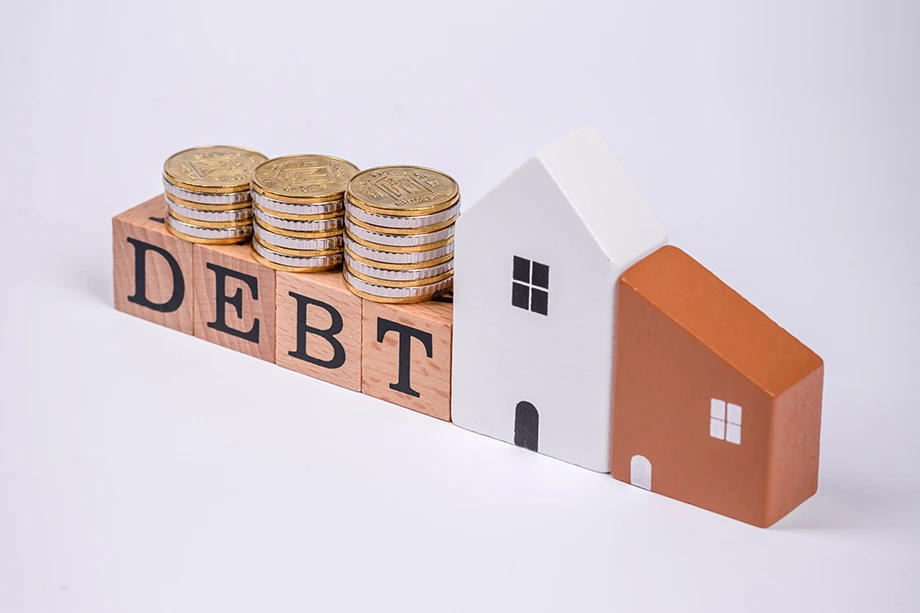
That context changes the meaning of the number. It should not be read as $1.2 billion in personal consumer debt owed by Robert Kiyosaki. It is financing attached to real properties, held alongside the partners who invested in them, and supported by the income those properties produce.
A large number in a headline tells you how big something is. It does not tell you what it is. Debt on a portfolio of rental apartments and debt on a vacation charged to a credit card can both be described as debt, but they work in opposite ways. One is connected to an asset designed to pay for itself. The other is connected to something that was consumed the day it was bought.
Robert Kiyosaki’s Debt Strategy: Not All Debt Is the Same
This distinction sits at the center of the Rich Dad philosophy. Rich Dad separates debt into two kinds, and the difference between them is the difference between building wealth and losing it. The full explanation is in the guide to good debt vs. bad debt, but the idea is simple enough to hold in your head.
Bad debt is money borrowed to buy things that take money out of your pocket: clothes, vacations, cars, and other purchases that lose value or get used up. The payment comes out of your paycheck, and nothing about the purchase helps you cover it. Bad debt is the reason so many households feel like they are working hard and still falling behind.
Good debt is money borrowed to acquire an asset that puts money into your pocket. In real estate, that means a property whose rent covers the loan payment and the cost of operating the building, with cash left over. The income from the asset supports the debt, not the other way around.
Good Debt vs. Bad Debt: What Is the Debt Attached To?
The test Rich Dad uses is not the size of the loan, and it is not the interest rate taken on its own. It is a question about the asset: what is the debt attached to, and does that asset produce income? That question comes straight from Rich Dad’s definitions of assets and liabilities. An asset puts money in your pocket. A liability takes money out.
Run any loan through that question and the answer sorts it quickly. A loan for a rental property whose income covers its costs passes. A loan for a purchase that only costs you money fails. The same logic explains why two people can earn the same income and end up in completely different places a few years later. One uses debt to buy things. The other uses it to acquire assets that pay for the things.
This is also why Rich Dad is careful about how it talks about debt. Telling people to avoid all debt sounds safe, but it treats a credit card balance and a loan on an income-producing asset as the same thing. Telling people to embrace debt is just as incomplete. Neither rule replaces the question about the asset.
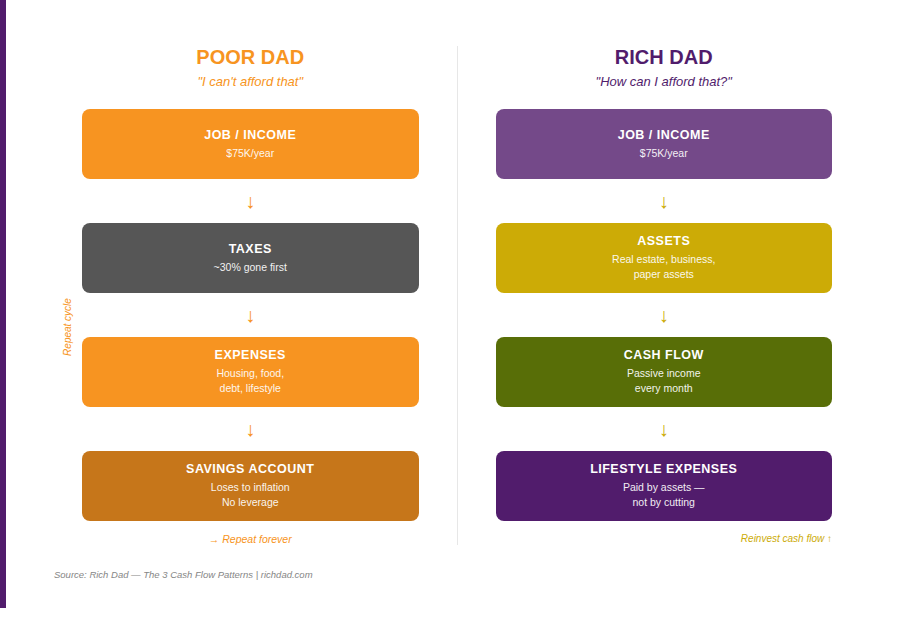
That is the heart of the Rich Dad approach to cash flow. The goal is not to avoid every dollar of debt, and it is not to collect as much of it as possible. The goal is to make sure every dollar borrowed is attached to something that earns.
How Other People’s Money Fits Into Robert Kiyosaki’s Debt Strategy
Robert Kiyosaki has long taught the use of OPM, or other people’s money, as a tool for acquiring assets. In real estate, OPM can include financing from a bank as well as capital from investment partners. Both let an investor control an asset that would be out of reach with personal savings alone.

The objective is to use debt strategically to acquire assets that produce cash flow, with the income from those assets supporting the debt and the operating expenses. That is very different from borrowing money to finance consumption. In one case, the borrowed money goes to work. In the other, it is simply spent.
Partners matter in this picture too. When an investor brings in partners, the deal is shared, and so is the responsibility for making it work. It is one reason Rich Dad puts so much weight on building a team and on understanding a deal well enough to explain it to the people who are financing it.
Debt Is a Tool, Not the Strategy
It is easy to read a big debt number and conclude that the strategy is to borrow as much as possible. That is a misreading. Debt itself is neither the goal nor the strategy. It is a tool. The strategy is acquiring income-producing assets and understanding how to use financial tools, including debt, responsibly.
Like any tool, debt can be used well or badly. Used well, it lets an investor build something that produces income for years. Used carelessly, it multiplies mistakes just as readily as it multiplies results. Rich Dad has never taught that good debt is risk-free. It has taught that the risk is manageable when the investor understands the asset, the numbers, and the people involved.
Rich Dad’s own risk map shows the kinds of problems that can threaten the income behind a loan, from renovation surprises to vacancies to changes in the market. These risks are the reason education comes first. An investor who has studied them can plan for them. An investor who has not is simply hoping.
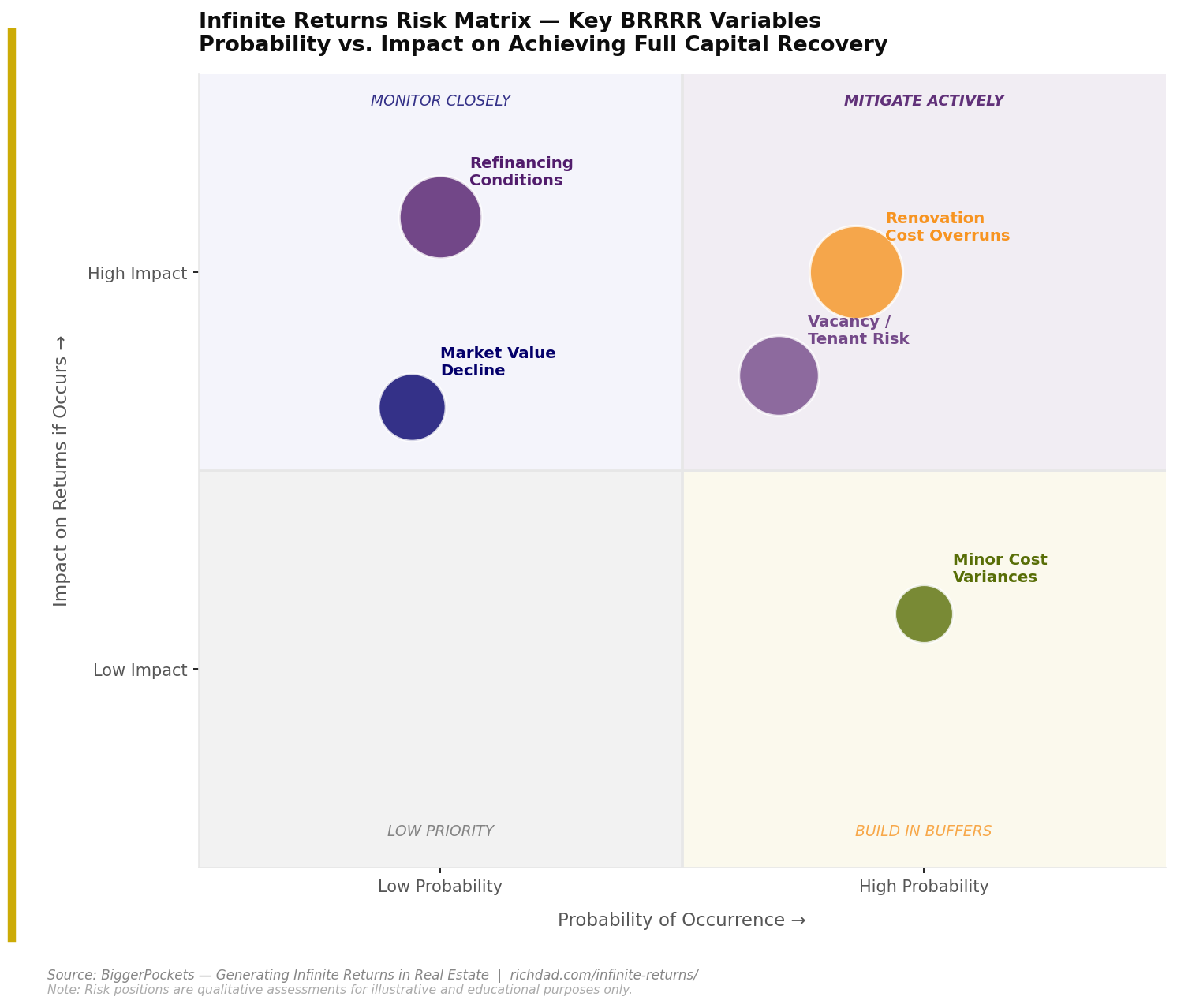
Even the strategies that sound most dramatic, such as infinite returns, depend on the same foundation: a real asset, real income, and an investor who knows what could go wrong.
Why Financial Education Comes Before Borrowing
Robert Kiyosaki’s investment philosophy has stayed consistent for decades. Financial education means understanding assets, liabilities, cash flow, debt, taxes, and how money actually works. Debt is one piece of that picture, and it only makes sense once the other pieces are in place.
That is why the Rich Dad path starts well before any investor signs a loan. For most people, the first step is getting out of bad debt, so that consumer balances are no longer draining the cash flow that could go toward assets. The step-by-step plan for getting out of bad debt lays out how to do it.
From there, the work is learning. Study how assets produce income. Practice evaluating deals before real money is on the line, and the CASHFLOW game is built for exactly that. Start small, so a mistake is something you can learn from rather than something that sets you back for years. Then, as knowledge and experience grow, the scale can grow with them. For a place to begin on the asset side, see Rich Dad’s real estate investing resources.
Education also changes how a headline reads. Someone who understands assets, liabilities, and cash flow can look at a large debt figure and know right away which questions to ask, rather than reacting to the size alone.
Before borrowing for any investment, it helps to ask a short set of questions.
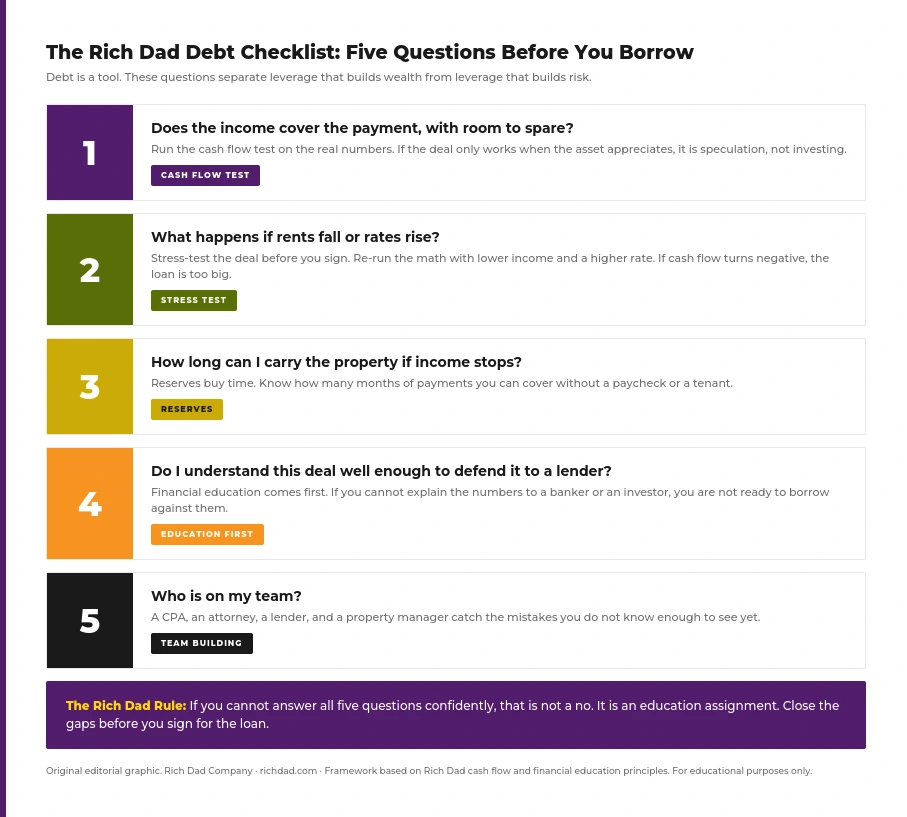
Notice what none of those questions asks: how big the loan is. Size only matters in relation to income, reserves, and knowledge. A small loan for a poor purchase is still bad debt. A larger loan attached to an income-producing asset, held by someone who understands it, is a different matter.
The Bottom Line on Robert Kiyosaki’s Debt Strategy
The $1.2 billion figure may make an attention-grabbing headline, but it is not the most important number in the story. The more important question, and the one Robert Kiyosaki encourages every investor to ask, is simple: what is the debt attached to, and does that asset produce income?
That distinction has been central to the Rich Dad philosophy from the beginning. Debt is not the goal. It is a tool, and the investors who benefit from it are the ones who have taken the time to learn how it works.
FAQs
The $1.2 billion figure represents debt held with partners against a portfolio of roughly 1,500 apartment units, as Kim Kiyosaki explained. It should not be read as $1.2 billion in personal consumer debt owed by Robert Kiyosaki.
Robert Kiyosaki teaches using debt as a tool to acquire income-producing assets, with the income from those assets supporting the debt and operating expenses. Debt itself is not the strategy. Acquiring assets is.
Good debt is borrowed to buy an asset that puts money in your pocket. Bad debt is borrowed to buy liabilities or consumption that take money out of your pocket. The test is what the debt is attached to and whether that asset produces income.
OPM stands for other people’s money. In real estate it can include bank financing and capital from investment partners, used to acquire assets that produce cash flow.
Rich Dad’s guidance is to build financial education first, get out of bad debt, and start small. Debt is a tool, and using it responsibly requires understanding the asset, the income, and the risks.