

The Book in Brief
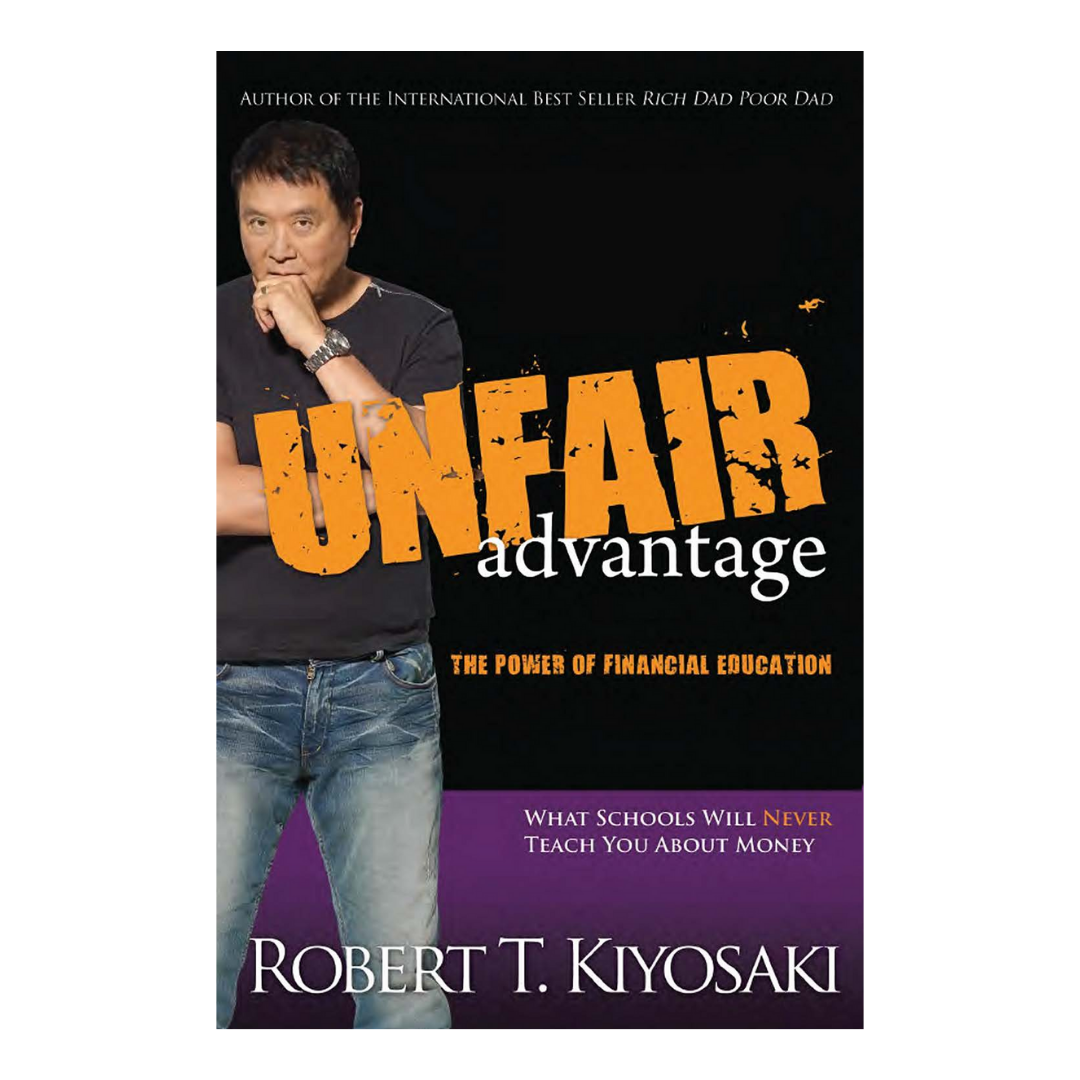
Unfair Advantage: The Power of Financial Education follows Robert Kiyosaki’s 2010 New York Times bestseller Conspiracy of the Rich. In it, he takes a hard-hitting look at the forces that affect people from every walk of life as they struggle to cope with change and with challenges to their financial world. The book underscores his central messages and challenges readers to change their context and act in a new way. Its core claim is that real financial education is an unfair advantage, one that most people never receive because schools rarely teach it.
The book is framed as a response to a straightforward question: what does school teach you about money? In most cases, the answer is “not much.” When there is any financial education, Robert Kiyosaki says, it is often delivered by financial planners and bankers, whom he describes as agents of Wall Street and the big banks. This is his characterization, offered as the starting point for an argument about who benefits from the way financial information is taught.
Stop Accepting Limited Options
A powerful theme is the rejection of a mindset in which people see themselves as disadvantaged, with limited options. Robert Kiyosaki urges readers to stop blindly accepting that label and to challenge the preconception that they will struggle financially for the rest of their lives. The book asks readers to act beyond their concept of limited options, to look for ways to learn, to build and to take responsibility for their future.
This is not a claim that everyone starts from the same place. It is a claim that financial education is available to nearly everyone and that it changes what is possible. Instead of waiting for permission or for conditions to improve, readers are encouraged to begin with what they can control: their own knowledge.
Education as Applied Knowledge
The book treats education as more than information. Robert Kiyosaki describes a fresh approach to his long-standing messages that includes clear, actionable steps that any individual or family can take, starting with education. Education becomes applied knowledge, which he calls a powerful tactic with measurable results. In other words, reading and learning only produce an advantage when they are converted into action: opening a business, buying an asset, learning to read a financial statement or understanding a tax rule.
This emphasis on application is a hallmark of Rich Dad teaching. The CASHFLOW board game, the courses and the books all push readers to practice, not just absorb. Unfair Advantage extends that approach by organizing financial education into five specific advantages that readers can pursue.
Two Points of View
The description notes that, in true Rich Dad style, readers are challenged to understand two points of view. The Rich Dad and Poor Dad contrast that began with Rich Dad Poor Dad is reused here: one perspective sees taxes, debt and risk as threats to be avoided, while the other sees them as tools to be understood and managed. By looking at both perspectives, readers can see how the same economic conditions can produce very different outcomes depending on knowledge.
The Five Unfair Advantages
At the center of the book are five unfair advantages that real financial education offers. The book describes them as the outcomes of real financial education. Each is an area in which, according to Robert Kiyosaki, the informed have an edge over the uninformed.
The Unfair Advantage of Knowledge
The first advantage is knowledge itself. A person who understands how money, business and investing work can see opportunities that others miss and avoid mistakes that others make. Knowledge is described as the foundation of the other four advantages, since each depends on understanding rules that are not widely taught. In the Rich Dad view, financial knowledge compounds: the more a person knows, the more they can learn and the more they can do.
The Unfair Advantage of Taxes
The second advantage concerns taxes. The book explains why the rich often pay less in taxes, while the middle class pays more. Robert Kiyosaki’s argument is that tax laws offer incentives for certain activities, such as owning a business, investing in real estate or creating jobs, and that people who understand and use those incentives legally may pay a lower effective rate than employees whose income is taxed before they receive it. The book is educational and not tax advice, and readers should consult a qualified tax professional about their own situation.
The Unfair Advantage of Debt
The third advantage is debt. The book is about how debt makes the rich richer and why it makes the poor and middle class struggle. The distinction rests on how debt is used. Borrowing to purchase consumer goods tends to drain income, while borrowing to acquire assets that produce income can multiply returns. Understanding the difference, and the risks, is part of the education the book promotes. Debt used without knowledge is dangerous, which is why it appears among the advantages of education.
The Unfair Advantage of Risk
The fourth advantage is risk. Most people are taught to avoid risk, but the book argues that education changes how risk should be understood. An informed investor can measure risk, reduce it through knowledge and control, and accept it where the potential reward justifies it. An uninformed person may take large risks without realizing it, or may avoid all risk and miss opportunities. In this framework, risk is not the enemy; ignorance is.
The Unfair Advantage of Compensation
The fifth advantage is compensation. People who understand how income works can look beyond salary to other forms of reward, such as business profits, investment returns and equity. The book suggests that compensation is not just about how much you are paid but about how you are paid, since different types of income carry different tax treatment, risk and potential for growth. Understanding compensation helps people negotiate better and structure their work and investments for greater benefit.
Why the Rich Get Richer While the Middle Class Shrinks
The book contends that the rich pay less in taxes while the middle class shrinks, with many people losing jobs, homes and retirement savings and paying more in taxes. This is Robert Kiyosaki’s reading of events following the financial crisis, and it reflects his view that financial education, not just income, determines who benefits from economic change. Readers will want to weigh his analysis alongside other perspectives and evidence.
What Readers Will Learn
- How financial education can be an unfair advantage
- Why real financial education is rarely taught in school
- How debt and taxes can make the rich richer and challenge the middle class
- The five unfair advantages: knowledge, taxes, debt, risk and compensation
- How to move from limited thinking to action
- Why education only works when it becomes applied knowledge
Turning the Five Advantages into Action
The five-part structure is easy to apply as a personal checklist. Readers can ask a question for each advantage:
- Knowledge: What am I learning this month, and how will I apply it?
- Taxes: Do I understand how my income is taxed, and have I spoken with a qualified professional?
- Debt: Which of my debts buy assets, and which buy only consumption?
- Risk: What risks am I taking, and which do I understand well enough to manage?
- Compensation: How am I paid, and are there other forms of income I could build?
These questions apply the book’s framework and are not quotations from it. They are a way of turning an idea into a habit.
Where It Fits in the Rich Dad Library
Unfair Advantage belongs with the titles that make the case for financial education and question conventional systems, including Why the Rich Are Getting Richer, FAKE and Second Chance. It pairs naturally with Rich Dad Poor Dad, where the foundational distinctions are laid out, and with Rich Dad’s Increase Your Financial IQ, which offers practical skill-building.
Who Will Get the Most From It
- Readers who want to understand how taxes, debt and risk affect wealth
- People who feel stuck and want a new way to think about their options
- Parents and educators interested in the role of financial education
- Rich Dad fans looking for a structured framework of five advantages
Why the Order Matters
The five advantages build on one another. Knowledge comes first because it makes the others visible: a person who does not understand tax rules, debt, risk or compensation cannot use them. Once knowledge is in place, each of the other four becomes a place to apply it. This sequence is why the book keeps returning to education as the starting point, rather than offering any one tactic as a shortcut.
Takeaway
Unfair Advantage argues that financial education is the most powerful and most overlooked tool for building wealth. By organizing its lessons around knowledge, taxes, debt, risk and compensation, it gives readers a clear framework and a call to act. Its enduring message is that people do not have to accept limited options; they can educate themselves and use what they learn.
Product Reviews
Joseph Ciavarelli
Opened my mind / eyes..Educating myself and my family to reach for our financial freedom.
SJ
I've read this book and very inspiring and got lot of Great information. When I read this book I would lay it done and process all of the information in Each Chapter. It's Definitely worth Reading. Robert Kiyosaki won't disappoint. I'm Currently Reading RICH DAD POOR DAD RIGHT NOW. I plan getting more books written by RTK
Amy Ma
Haven’t opened yet but delivery was fast
LaSchelle Quarterman
I purchased CASHFLOW to play with my three grandchildren, ages 12, 12, and 11, and they absolutely LOVE it! What surprised me the most is that they were able to learn and enjoy the adult version of the game. One of my 12-year-old grandsons has already made it out of the Rat Race and onto the Fast Track!
Playing CASHFLOW has become part of our nightly routine. After the kids take their showers and get ready for bed, we sit down and play for about an hour. Believe it or not, this game has even made bedtime routines easier! They are so excited to play that they stay on task and get everything done without me having to constantly remind them.
Initially, I was concerned that the game might be too complicated for their ages. However, by the third night, they had caught on and were playing with confidence. I even ordered the children's version because I thought the adult version would be too difficult, but now I'm not sure we'll even need it!
Our CASHFLOW game has become a permanent fixture on the dining room table! We leave the board set up with everyone's pieces in their spaces, along with their financial sheets and money, so we can pick up right where we left off the following evening.
I also highly recommend watching the YouTube tutorial on how to play CASHFLOW. It was extremely informative and helped us understand the game much better.
As a grandmother, I love that my grandchildren are having fun while learning valuable lessons about money, investing, financial decisions, and building wealth. These are life skills that I believe children should be introduced to at an early age.
I highly recommend CASHFLOW to families with children! Don't underestimate what kids can learn when they're engaged and having fun. This has turned into much more than just a board game for our family. It's become quality time together, a learning experience, and something we all look forward to every evening!
Erik Navarro
I like very very much! go to my freedom