Welcome to the holidays post-COVID. Despite being five years ago, it’s hard to believe we’re no longer living through a pandemic. You’d think given the way things were impacted across the country, the holiday seasons would look different, perhaps calmer, even. Maybe folks would take advantage of the opportunity to slow down and reflect on what really matters. But we’re just not wired that way, and as quickly as it could, the holiday season returned to its usual hustle and bustle as any other one.
But by now, you’ve probably enjoyed several Thanksgiving dinners, watched a lot of football, and picked up some “great” deals online on Black Friday, Small Business Saturday, and Cyber Monday—three days that make up the biggest shopping days of the year.
Over the course of the weekend, Black Friday shoppers were expected to spend on average $700, contributing to the over $100 Billion retailers make during this period. This is astounding given the fact that half of all American families have next to nothing saved for retirement. As Business Insider reports, “The average retirement savings of all American families is $95,776, but there is more to that number than meets the eye. Since so many families have no savings, the median—50th percentile—family has just $5,000 saved.”
Spending holiday money today at the expense of your future is the definition of the Rat Race
What can be the explanation for people seemingly losing their collective minds when it comes to holiday spending? The answer lies in the fact that our culture is engineered to produce great employees and great consumers. The retail industry are masters at advertising and marketing, getting you to desire what you don’t need and to compare yourself to others around you, or an ideal life you haven’t realized yet. In short, our culture specializes in Keeping Up with the Joneses.
At Rich Dad, we call this the Rat Race, and the holidays are the time of year when the pressures of the Rat Race are felt the most.
The majority of people live their lives in the Rat Race. They buy into the old rules of money: go to a good school, get a high-paying job, buy a house, and invest for retirement in a diversified portfolio of stocks, bonds, and mutual funds. You’ve seen many Rich Dad articles written extensively on why these rules don’t work any more, such as the article, “The Real Reason You Feel (and Are) Poorer”.
In the Rat Race, you don’t actually generate wealth. Instead, you trade your time for money, and you spend it on liabilities that take that money out of your pocket. The financial statement of a person in the Rat Race might look like this:

Your Rat Race expenses are always making someone else rich
In the image above, there are two financial statements listed for a reason.
Rich dad said, “Sophisticated investors must see at least two financial statements simultaneously if they want a true picture.”
He also said, “Always remember that your expense is someone else’s income. People who are out of control of their cash flow make the people who are in control of their cash flow rich.”
In the Rat Race, you make other people rich through your spending habits. Your income goes to liabilities, which are assets for someone else. In the case of the chart above, it’s your mortgage making the bank rich because it is their asset and your liability. But this chart could have easily been your Black Friday weekend shopping making the retailers rich.
How to get out of the Rat Race
The rich don’t live in the Rat Race because they understand the fundamental concept of the differences between assets and liabilities. The financial statement of a rich person looks like this:
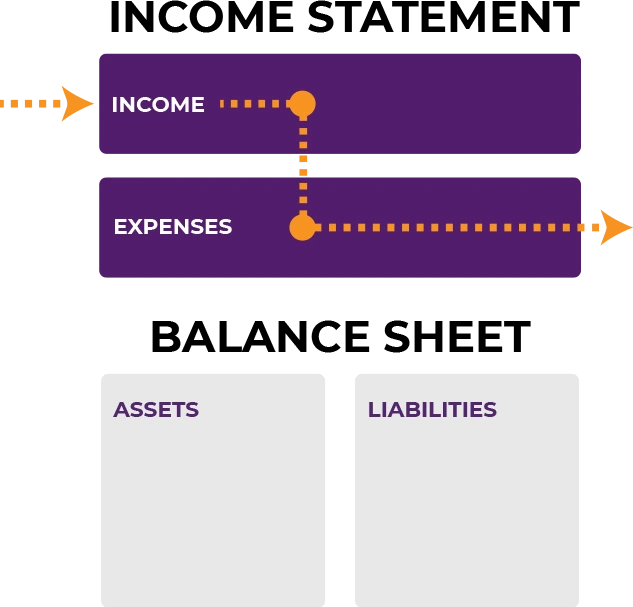
Rather than primarily spend their income on liabilities, the rich spend it on assets that produce cash flow, which they then use on either more assets or if they can afford it, liabilities.
This is fundamentally how they get out of the Rat Race. Rather than use their income to make someone else rich, they use it to make themselves rich.
Now, does that mean they don’t buy liabilities or contribute to others’ asset columns? No. But it does mean that they do so out of the abundance of the wealth created by their own assets (passive income), not with money that comes from employment (earned income). The cash flow patterns between the rich and the middle class and poor are like night and day.
How about a different focus this holiday season?
At this point, you’ve probably done your shopping. Maybe you’ve spent hundreds of dollars on toys and gadgets—some of you have spent thousands. The hope is that you haven’t spent too much on items that will probably be forgotten a year from now while it may have put yourself in a bad financial position.
Take for example, Robert and Kim Kiyosaki’s first holiday season. They were poor and didn’t have much, but found a way to make it work. Robert always liked to buy Kim nice things, but refused to spend money if he didn’t have an idea where it was coming from. They both worked hard to pay themselves first by setting aside money for investing and for increasing our financial education before spending it on gifts for each other. That was more important than nice gifts. Ultimately, they knew financial discipline first, would create financial freedom later.
As they became more financially free, the gifts became nicer and easier to buy. It’s a nice place to be in, but it wasn’t an overnight process, it took years of financial discipline. The best part: it allows one to give without restraints; as the old saying goes, it’s always better to give than to receive.
As the holidays fast approach, we would do well to remember what our richest gifts are—our families and our friends. At Rich Dad, our mission is to equip you with the knowledge needed to be financially free. After all, knowledge is the new money.
However, it would be misguided to say that Rich Dad is just about money. Money is important, no doubt about it. And a big part of our message is getting smarter with your money. But at the end of the day, Rich Dad is about freedom and security—things that money brings. Our belief is that financial education creates a world that is freer and more secure. It is a world where you can enjoy your family because you have more time and you can rest easier at night because you know you’ve invested well and set your family up for financial security
This holiday season, as the presents are opened and the tables are set, take the time to really enjoy the loved ones in your life—your richest gifts. And take a moment to assess whether you’ve set them, and yourself, up for financial freedom—to get out of the Rat Race. The best gift you can give your family is a sound financial education and a bright financial future. Those gifts will last a lifetime.
Happy Holidays from all of us at Rich Dad.